

Contents
Starting 2026 with a Faster, More Reliable WordPress Hosting Setup

Introduction
By the time many website owners reach the middle of their digital journey, a subtle shift begins to happen. The excitement of launching a website has settled. The fundamentals—security, backups, and basic optimization—are in place. Content is being published consistently. Traffic is growing, even if slowly.
Then questions start to surface.
Pages feel slightly slower during busy periods. The WordPress admin dashboard isn’t as responsive as it once was. You’re planning new features, running campaigns, or managing more than one site—and the current setup begins to feel restrictive.
This moment matters—not because something is broken, but because growth is beginning.
In 2026, hosting decisions play a much bigger role than many people expect. WordPress hosting is no longer just about keeping a site online—it directly affects performance, reliability, scalability, and how confidently you can move forward.
This article explores how hosting influences website success, when upgrading makes sense, and how managed WordPress hosting fits into a growth-focused strategy—especially once your site is already built and secured.
WordPress hosting in 2026 has a direct impact on speed, uptime, and scalability. As websites grow beyond early-stage traffic and simple use cases, starter hosting plans can begin to limit performance and flexibility. Managed WordPress hosting— including platforms such as Pressable—is designed for growth-phase websites that need consistent speed, stronger reliability, expert WordPress support, and infrastructure that scales smoothly without adding technical complexity.
If you’re following our 2026 website journey, make sure you’ve covered the protection layer first in The 2026 Digital Reset: How to Secure, Organize, and Protect Your Website from Day One .
Why Hosting Matters More Than Ever in 2026
Hosting is often treated as background infrastructure—something chosen once and forgotten. In practice, it shapes nearly every visitor experience and many of the operational decisions you make.
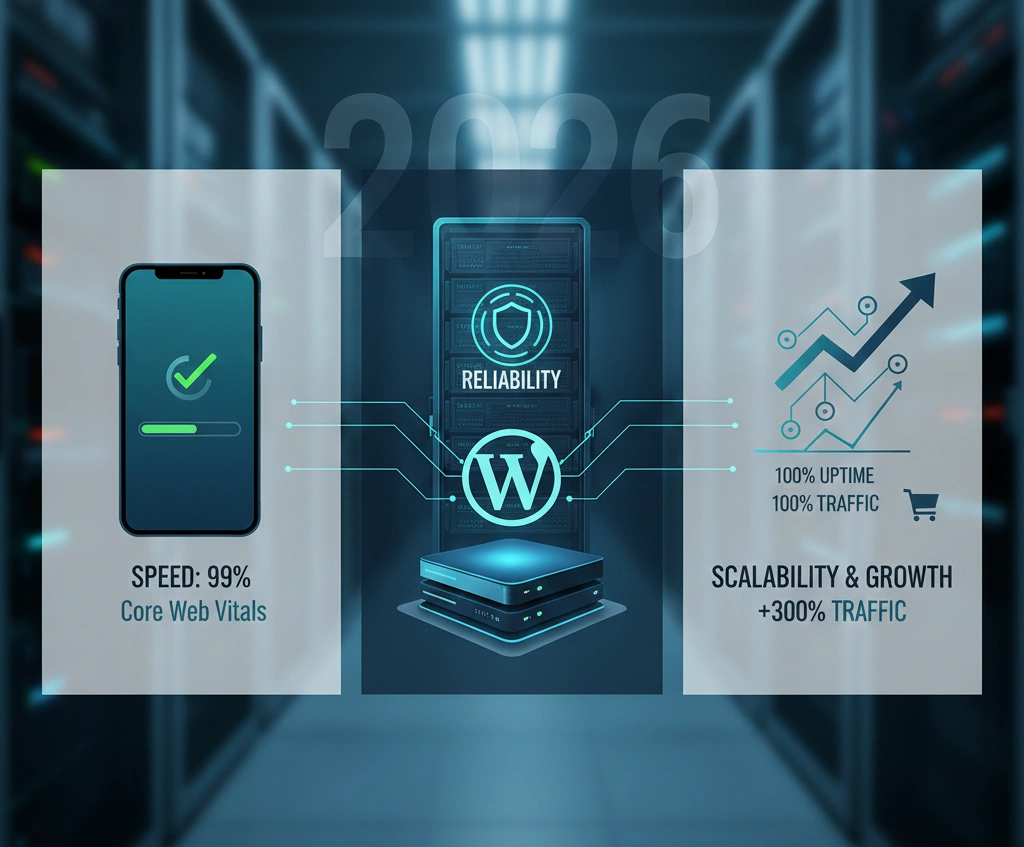
In 2026, expectations are higher. Visitors expect websites to load quickly, remain available at all times, and work smoothly across devices and locations. Search engines increasingly reward performance and reliability. Businesses rely on websites as revenue-generating tools, not static brochures.
This makes WordPress hosting in 2026 a strategic decision—not a technical afterthought.
Speed Is No Longer Optional
Website speed directly affects user behavior. When pages load slowly, visitors don’t wait—they leave. Even small delays can reduce engagement, limit conversions, and weaken trust.
As websites grow, performance issues often appear gradually:
- Larger media libraries
- More plugins and features
- Higher traffic volumes
- More complex database queries
Starter hosting environments handle early growth well, but they are not always built for sustained performance under load. Managed WordPress hosting is designed to maintain speed as demand increases.
Reliability Builds Trust
Downtime rarely happens at a convenient time. It often occurs during traffic spikes, promotions, or campaigns—when visibility matters most.
When a site becomes unavailable:
- Potential customers move on
- Search engines may register availability issues
- Leads and transactions are lost
- Brand credibility suffers
In 2026, reliable WordPress hosting means proactive monitoring, redundancy, and rapid recovery—not simply “good enough” uptime.
Scalability Enables Growth
Growth introduces unpredictability. A post might go viral. A seasonal promotion may drive unexpected traffic. A new feature can attract more users than planned.
WordPress hosting in 2026 must support:
- Traffic spikes without manual intervention
- Efficient caching and content delivery
- Database performance under load
- Expansion to multiple sites or environments
Hosting that cannot scale smoothly doesn’t just slow a site—it quietly limits what the site can become.
Signs Your Current Hosting Is Becoming a Limitation
Not every website needs to upgrade its hosting. But as a site grows, certain patterns begin to appear—quiet signals that it may be time to reassess.
1. Performance Friction
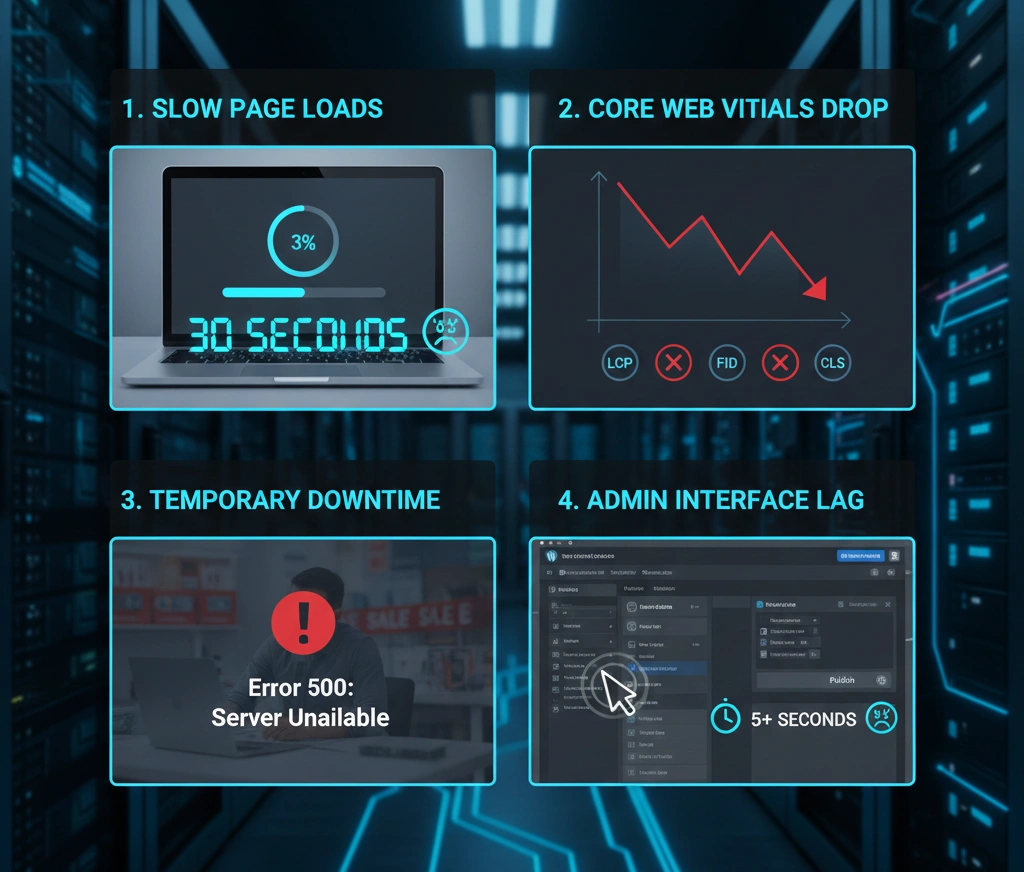
Performance issues often arrive gradually. You might notice:
- Page load times creeping above expectations
- Declining PageSpeed or Core Web Vitals scores
- A slower WordPress admin dashboard
- Higher bounce rates or early page exits
These signals often indicate that the hosting environment is beginning to operate under strain.
2. Reliability Concerns
Reliability issues may start as rare inconveniences, then appear more often as traffic increases:
- Short periods of downtime
- Error messages during peak usage
- Admin access issues under load
Even infrequent disruptions can quietly erode trust—both with visitors and search engines—over time.
3. Support Limitations
As websites become more complex, the quality of support matters more. Slow response times, generic replies, or limited WordPress expertise can turn small issues into prolonged disruptions.
4. Growth Restrictions
Growth often introduces new requirements. You may want to:
- Manage multiple WordPress sites
- Add ecommerce or membership features
- Use staging environments for safe testing
- Prepare for traffic surges or campaigns
When hosting begins to limit these goals, it’s often a sign that your site has outgrown its original setup.
What Managed WordPress Hosting Means Today
Managed WordPress hosting represents a different approach to infrastructure—one focused less on raw server access and more on long-term reliability and efficiency.
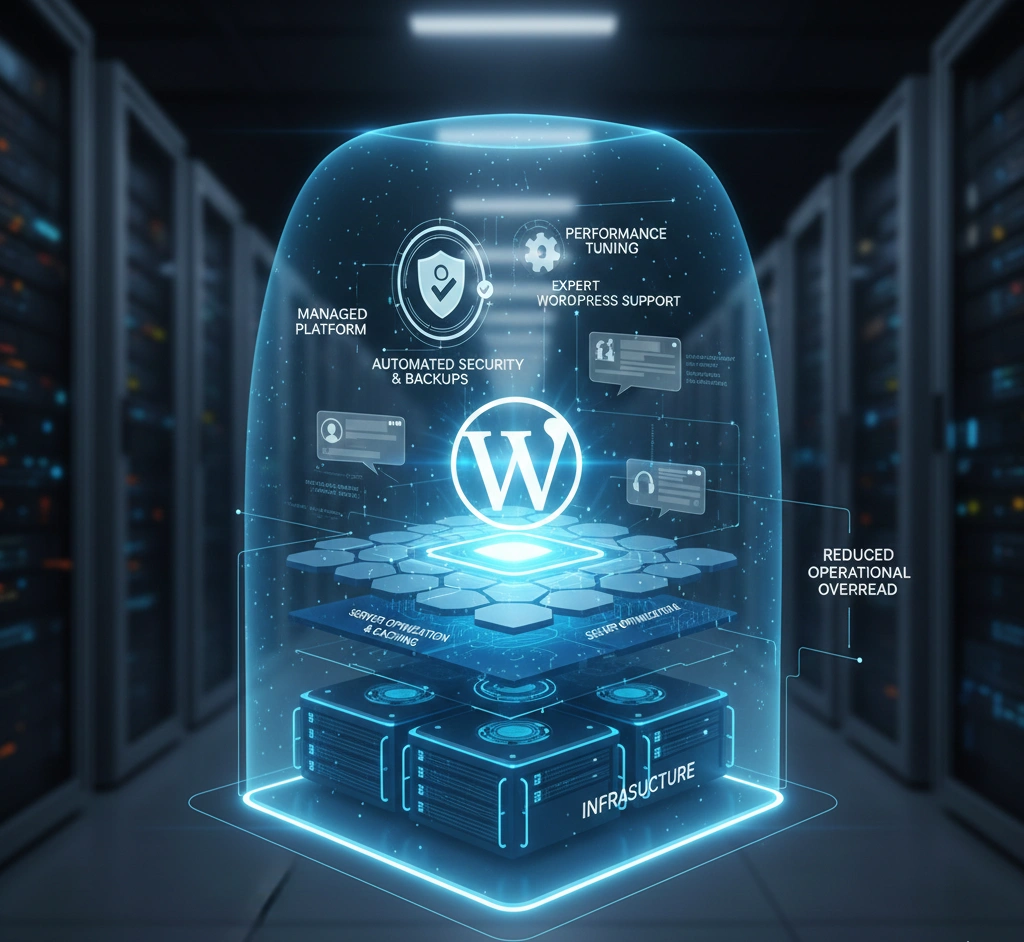
Rather than handing over server space alone, managed hosting providers take responsibility for the systems that keep WordPress sites stable and performant:
- Server environments optimized specifically for WordPress
- Automatic updates and ongoing maintenance
- Performance tuning, caching, and resource management
- Security handled at the infrastructure level
- Regular backups with reliable recovery options
- Technical support focused on WordPress itself
This model reduces operational overhead and removes much of the technical burden from day-to-day site management—allowing site owners to focus on content, strategy, and growth instead of infrastructure.
How Pressable Fits Growth-Focused WordPress Hosting in 2026
Pressable is designed for WordPress sites that have moved beyond early-stage needs. It prioritizes performance, reliability, and scalability—while remaining fully aligned with the WordPress ecosystem.
Performance-Oriented Infrastructure
The hosting environment is optimized specifically for WordPress workloads, with a focus on maintaining speed as traffic increases:
- Global content delivery for fast access worldwide
- Modern server hardware for efficient database and file operations
- Multi-layer caching to reduce server load
- Automatic scaling during traffic spikes
Together, these elements help keep performance consistent—even as demand grows.
Security and Stability as a Baseline
Rather than treating security as an add-on, Pressable integrates protection directly into the hosting layer through continuous monitoring, automated updates, regular backups, and infrastructure-level safeguards. This reduces manual effort while lowering long-term risk.
WordPress-Specific Support
Support teams work exclusively with WordPress, which shortens troubleshooting time and improves resolution quality—an important advantage for agencies and growth-oriented businesses managing complex sites.
Who Benefits Most from Upgrading Hosting
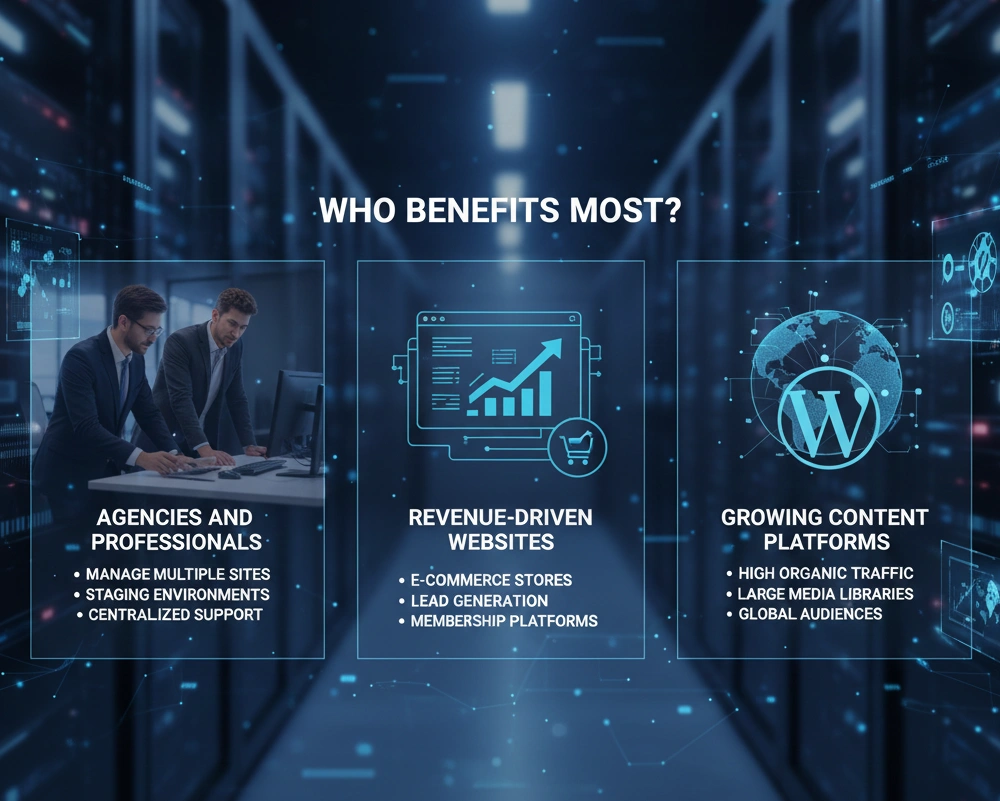
Managed WordPress hosting is not necessary for every website. Its value becomes clear in specific situations—particularly when performance, reliability, and scale begin to matter more.
Where Managed Hosting Adds the Most Value
Managed solutions tend to benefit sites that fall into one or more of the following categories:
- Agencies and professionals managing multiple client sites, staging environments, and shared workflows
- Revenue-driven websites such as ecommerce stores, lead-generation sites, and membership platforms
- Growing content platforms with rising organic traffic, larger media libraries, or international audiences
In these scenarios, speed, uptime, and scalability directly influence outcomes rather than serving as background concerns.
When Starter Hosting Still Makes Sense
Entry-level hosting remains appropriate when:
- Traffic is modest and predictable
- Performance meets current expectations
- The site is not revenue-critical
- Growth plans are minimal or long-term
There is no universal “right time” to upgrade—only alignment between infrastructure and goals.
Planning a Thoughtful Hosting Upgrade
Upgrading hosting works best as a deliberate decision rather than a reaction to problems.
- Evaluate performance: review analytics, load times, and peak usage
- Assess impact: estimate revenue loss from slowness or downtime
- Prepare migration: review plugins, back up sites, test after move
Managed providers typically assist with migration to minimize disruption and reduce risk.
How Hosting Fits with Security and Maintenance
For sites with established security and maintenance practices, upgrading hosting usually enhances existing systems rather than replacing them. Managed hosting complements automated backups, security monitoring, performance optimization, and structured maintenance routines.
For WordPress sites entering a growth phase, many teams explore managed solutions designed specifically for this stage. Platforms such as Pressable are built to support higher traffic, stronger performance, and professional WordPress workflows without adding technical burden.
Making the Right Hosting Decision in 2026
Choosing WordPress hosting in 2026 is about readiness, not pressure. An upgrade makes sense when performance affects results, reliability influences trust or revenue, and growth is already underway. It’s not about abandoning your current setup—it’s about supporting it with infrastructure that matches your ambitions.
Conclusion: Supporting What You’ve Already Built
Your website journey likely began with building a site and securing it properly. Hosting becomes the next consideration—not because something is broken, but because progress creates new requirements.
In 2026, WordPress hosting must support speed, reliability, and scalability without adding unnecessary complexity. Understanding when and why to upgrade allows you to protect momentum and plan growth with confidence.
Infrastructure may not be visible to visitors, but its impact is felt every time a page loads—or doesn’t.
For WordPress sites entering a growth phase, many teams choose managed hosting that removes technical friction while supporting performance at scale.
Learn how to keep your growing site healthy year-round in Website Maintenance Made Simple: A 2026 Guide to Stress-Free WordPress Management .
Affiliate Disclosure: Some of the links in this article are affiliate links. This means we may earn a commission if you purchase through them, at no additional cost to you. We only recommend hosting providers we have tested, reviewed, or genuinely believe offer value to our readers.